 Custom
Vatican Wedding Dress Code: Custom Gowns That Pass
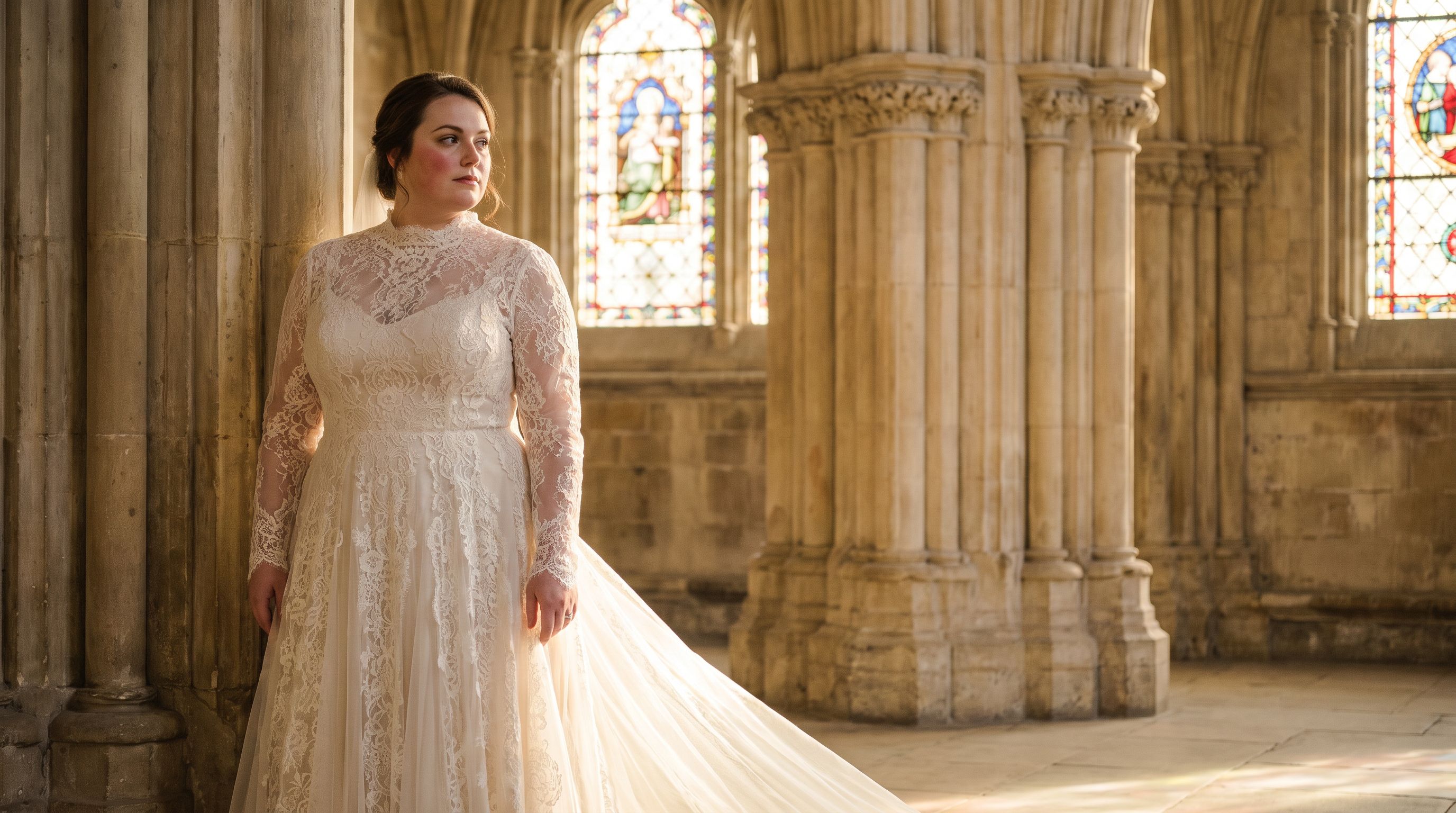
Why Church Dress Codes Are Back in the Spotlight
A recent viral moment reminded brides everywhere that venue dress codes are real and enforceable. As Yahoo reported, a bride was criticized online for her bare shoulders at her Vatican wedding — and fired back that the church itself had approved her look. The story split opinions, but the practical takeaway is clear: if you’re marrying in a cathedral, basilica, or any house of worship with a formal dress code, you need to know the rules before you buy or commission your gown.
This isn’t just a Vatican issue. Many Catholic churches, Orthodox cathedrals, synagogues, mosques, and LDS temples have specific modesty requirements. And whether you find those rules deeply meaningful or simply a logistical hurdle, the last thing you want is a last-minute scramble for a shawl — or worse, being turned away at the door.
What Most Houses of Worship Actually Require
Dress codes vary by denomination, parish, and even by the officiant’s interpretation, but here are the most common rules you’ll encounter:
Coverage Norms Across Faiths
While the bullet points above capture broad patterns, specific faith traditions have distinct expectations worth understanding before you design:
- Muslim brides marrying in a mosque typically need full arm and leg coverage, a high neckline, and a hijab or other head covering. Many hijabi brides prefer gowns with built-in high collars and long sleeves so the hijab drapes naturally without competing with a separate neckline piece. Fabric opacity matters here — sheer illusion panels may not meet the requirement in many mosques.
- Jewish brides in Orthodox ceremonies often cover their collarbones, elbows, and knees. After marriage, many Orthodox women cover their hair; some brides plan a tichel or decorative head covering that coordinates with the gown’s fabric. If the ceremony takes place with a mehitza (partition), your gown will primarily be seen by female guests on your side — some brides embrace bolder design choices knowing this, while others prefer a look that’s cohesive across both the ceremony and a mixed-gender reception.
- LDS temple ceremonies require full coverage: sleeves to the wrist, neckline at the collarbone, skirt to the ankle, and typically white or ivory fabric throughout. Many LDS brides commission a gown that works beautifully inside the temple and then add a more dramatic overskirt, cape, or accessory for photos and the reception.
The critical first step for any faith context: ask your officiant or venue coordinator for written guidelines as early as possible, ideally before you start shopping or designing. Rules that seem obvious in person can be surprisingly specific on paper — one basilica may allow cap sleeves while another insists on sleeves that reach the elbow.
Why Off-the-Rack Gowns Make Coverage Harder
Most off-the-rack bridal gowns are designed to appeal to the widest possible market, which means strapless, sweetheart, and deep-V necklines dominate the racks. If you fall in love with one of those silhouettes and then realize your church requires covered shoulders, you’re left with two options:
- Add a topper — a bolero, cape, or detachable sleeves. These can look beautiful, but they’re an extra cost and fitting, and they don’t always integrate seamlessly with the gown’s structure.
- Alter the gown — adding fabric or an illusion panel to an existing dress is possible but tricky. Matching lace or fabric perfectly is hard, and structural changes to a finished gown have real limits.
- Faster timeline — you can often purchase and alter within two to four months
- Lower total cost when budget is tight, especially with simpler coverage needs
- Gown and topper purchased separately, offering mix-and-match flexibility
- May need extra alterations to blend the look seamlessly
- Risk of mismatched fabrics or lace between pieces
- Topper can shift during the ceremony
- Sleeves, neckline, and back coverage designed as one cohesive piece
- Fabric, lace, and beading matched perfectly throughout the gown
- Smoother, more integrated silhouette with no visible seams between add-ons
- Nothing to remove, adjust, or worry about mid-ceremony
- Every detail addresses your venue’s specific rules from the first sketch
- Requires longer lead time — typically six to ten months or more
We’ve covered the add-on route in depth — see our guide to bridal capes, detachable sleeves, and boleros — and for many brides it works well. But if your venue has strict or unusual rules, or if you simply want a seamless look, a custom gown designed around those rules from the first sketch is often the smoother path.
Designing a Custom Gown Around a Dress Code
-
Get the rules in writing
Ask your officiant or venue coordinator for the exact dress code. Take note of specifics: must sleeves reach the wrist or just cover the shoulder? Is illusion fabric (sheer mesh with embroidery) acceptable, or does the fabric need to be opaque? Some venues distinguish between the ceremony and the reception — you may have more freedom at the party.
-
Bring the rules to your consultation
When you meet a custom dressmaker, share the written guidelines alongside your inspiration photos. A skilled maker will know how to translate “covered shoulders” into a design you actually love — whether that’s a romantic off-the-shoulder sleeve that sits just above the elbow, a fitted illusion yoke with floral appliqué, or elegant long sleeves in French lace.
-
Choose the right fabrics
If your venue requires opaque coverage, your maker might suggest lined lace, mikado, or crepe sleeves rather than sheer tulle. If illusion fabric is allowed, you get the drama of visible skin with the modesty the venue demands. This is exactly the kind of detail that’s hard to retrofit onto a finished gown but easy to plan from the start.
-
Build in versatility
Many brides want coverage for the ceremony and a more bare look for the reception. A custom dressmaker can build in detachable sleeves, a removable lace overlay, or a high-neck ceremony panel that unbuttons to reveal a lower neckline underneath. Because it’s all designed together, the transitions are seamless.
-
Plan your timeline
Custom gowns with complex sleeves, illusion panels, or convertible features typically need six to ten months from first consultation to final fitting — sometimes longer if specialty fabrics are sourced internationally. If you’re planning a destination ceremony (like a Vatican wedding), build in extra time for shipping and any on-location pressing or steaming. Start the conversation with your maker as early as possible.
-
Confirm during fittings
At your toile or muslin fitting, bring a photo of the venue’s guidelines and double-check every detail. Your dressmaker can adjust sleeve length, neckline depth, or back coverage at this stage far more easily than after final fabric has been cut.
For more on what to expect at that first meeting, our guide on your first custom dressmaker consultation walks you through exactly what to bring.
What This Typically Costs
Adding sleeves or coverage to a custom gown doesn’t have to blow up your budget, but it does affect price. Here are the main cost drivers:
With a custom gown, the sleeves and coverage are factored into the total price from the beginning, so there are fewer surprise costs down the road. Our breakdown of how much a custom wedding dress costs covers the full picture, including how fabric choice, beading, and your maker’s experience level affect the final number.
What to Ask Your Dressmaker
If you’re considering a custom gown for a church, cathedral, or any house-of-worship wedding, here are a few specific questions to bring to your consultation:
- Have you designed gowns for venues with strict modesty requirements before? Experience matters — a maker who’s worked with church dress codes will anticipate issues you haven’t thought of.
- Can you show me examples of sleeves or coverage that would meet these specific rules? Ask to see past work or sketches.
- What fabrics do you recommend for coverage that still photographs beautifully? Opacity, weight, and drape all affect how coverage feels and looks.
- Can we build in a way to transition from ceremony to reception? If you want more freedom at the party, discuss convertible options early.
- What’s a realistic timeline given the complexity of what I need? Be upfront about your wedding date so your maker can tell you honestly whether the timeline is feasible.
Our deeper guide on modest custom wedding dresses covers sleeve types, coverage levels, and faith-specific considerations in more detail.
You Shouldn’t Have to Choose Between the Venue and the Vision
A church dress code doesn’t mean settling for a look you don’t love. It means designing with an extra parameter — and for a skilled custom dressmaker, that parameter is an opportunity, not a limitation. Whether you’re marrying at the Vatican, a local parish, a synagogue, or a mosque, the right maker can create a gown that honors the space, fits your body beautifully, and makes you feel completely yourself.
Ready to bring your dream dress to life?
Tell us what you're picturing — style, timeline, and budget — and we'll connect you with custom dressmakers who can make it. Free, no obligation.
Get matched with a dressmakerRelated guides
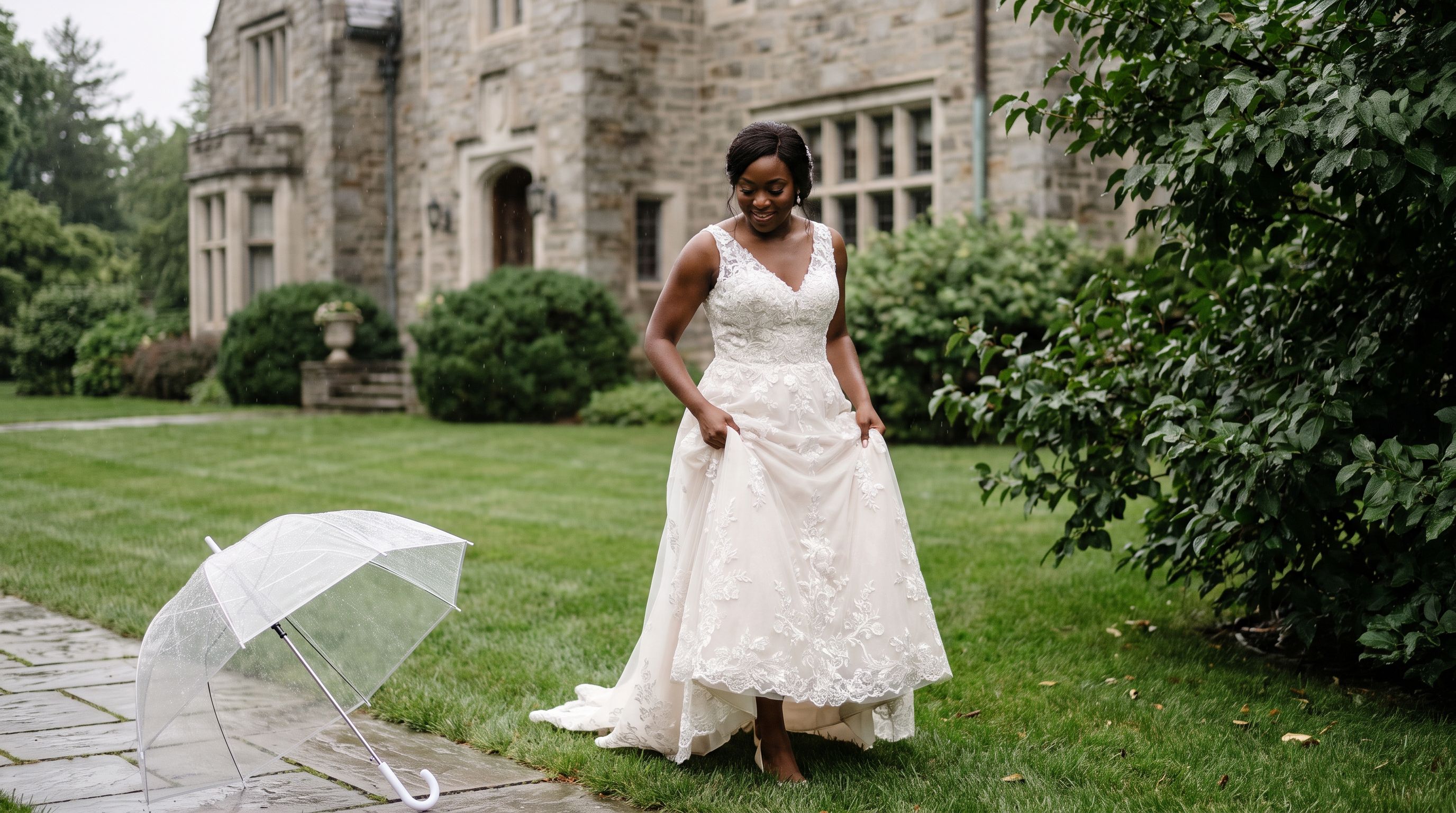
Outdoor Wedding Dress: Rain, Grass, and Humidity Guide
How to choose a custom outdoor wedding dress that survives rain, grass, wind, and humidity — fabric picks, hem strategy, and what weatherproofing costs.
Read guide →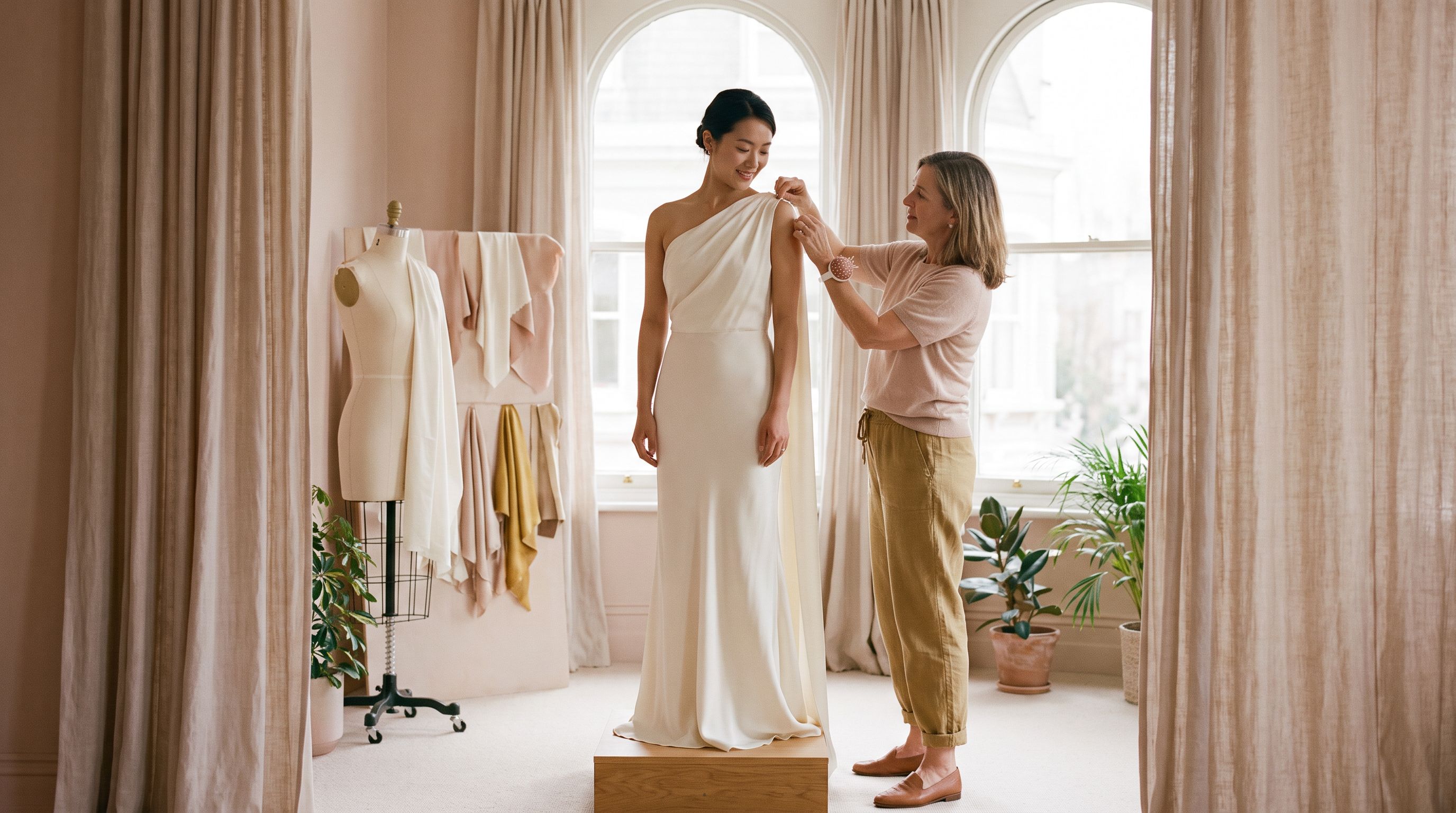
Halter vs One-Shoulder vs Asymmetric Gown: Fit & Cost
Halter vs one-shoulder wedding dress: how each neckline carries weight, flatters different shoulders and busts, what it costs custom, and what to ask your maker.
Read guide →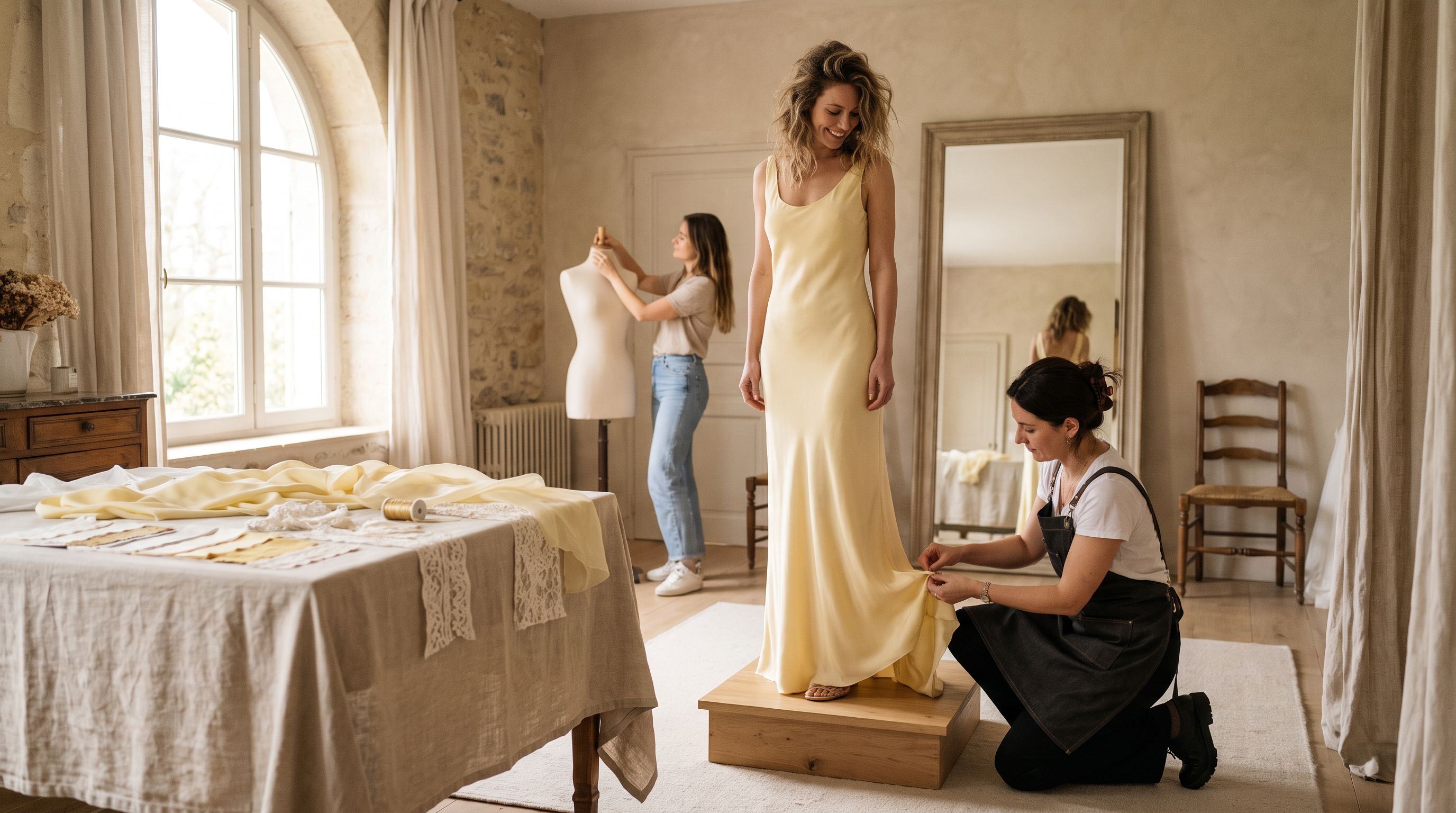
Butter Yellow Wedding Dress: Custom Color, Fit, Cost
Butter yellow is bridal's softest new neutral. Here's how custom dyeing works, which fabrics hold the shade, what it costs, and how to pick your tone.
Read guide →